The world of fairies is full of symbols: flowers that attract their presence, colors that represent their essence, natural elements that act as bridges between worlds. Knowing this language is to approach their realm. Here we explore the hidden meanings behind faerie symbolism.
Flowers associated with fairies
Bluebells (and their close relative, the harebell) are perhaps the most faerie of flowers. In England and Scotland, they are said to mark the path to the faerie realm. To tread on a bluebell carpet was to risk being lost forever—or led astray by fairy music. In some regions, ringing bluebells was believed to summon the fairies—or to call death. The flower's delicate, drooping form and its preference for woodland shade linked it to the hidden, the mysterious.
Four-leaf clover protects against fairy enchantment and, in many traditions, grants the ability to see them. The three-leaf clover was sacred to the Druids; the rare fourth leaf was thought to break any faerie spell and reveal the true nature of things. Carrying one was insurance against being led astray or glamoured.
Primroses and cowslips were known as "fairy keys" or "keys of heaven"—they were believed to unlock the gates to the invisible realm. Planting them near the house invited benevolent fairies. They bloom in early spring, at the time when the veil between worlds is said to be thinnest.
Mushrooms and toadstools, especially the fly agaric with its red cap and white spots, have been linked to altered states and Otherworld journeys. Fairy rings—circles of mushrooms—form where fairies are said to have danced. In some cultures, certain fungi were used in shamanic rituals to "travel" to the faerie realm.
Faerie colors
Colors carry meaning in faerie symbolism:
- Green is the color of the faerie realm par excellence—of forests, meadows, and the growing world. Fairies of the earth and plants are often depicted in green. It signifies life, fertility, and the wild.
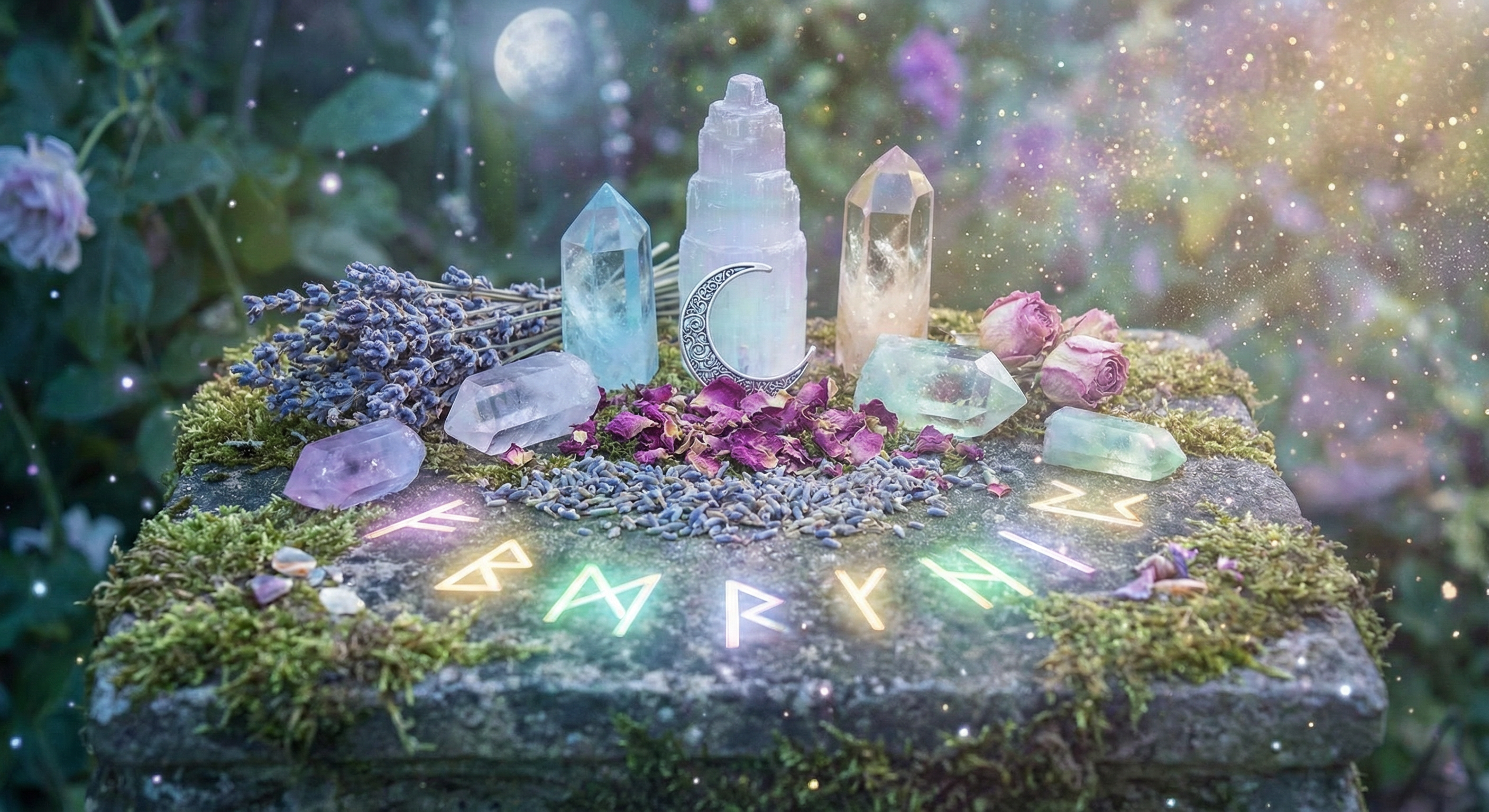
- Lavender and violet are the colors of twilight, when fairies are most active. They represent mystery, magic, and the thinning of the veil. Titania and other fairy royalty are often shown in these hues.
- Silvery white evokes moonlight, purity, and the fairies of light. It is associated with benevolence, with the "good people" rather than the darker fae.
- Golden suggests fairy dust, transformation, and the gifts of the realm. Gold is what the leprechaun guards; it is the color of the treasures that await those who please the fairies.
Elements of protection
Folklore is full of ways to protect oneself from hostile fairy influence:
Iron, especially in the form of a horseshoe, a key, or scissors, is said to repel fairies. Cold iron burns them or bars their passage. This may reflect the fairies' association with a pre-Iron Age world—beings of the old, bronze-using peoples.
Bells have ambiguous power: in some traditions they drive fairies away; in others they summon them. Church bells were thought to disperse fairy hosts. Small bells sewn into children's clothes might protect them from abduction.
Salt on thresholds and around the home creates a barrier. Salt purifies and repels; it is the opposite of the fairies' element, which is often linked to the damp, the wild, the uncharted.
St. John's wort and rowan (mountain ash) were hung over doors to keep fairy mischief at bay. Rowan was particularly powerful—"rowan and red thread make the witches tine [lose] their speed."
Attracting fairy benevolence
Just as there are protections, there are ways to invite fairy favor. Milk, bread, honey, and cream left as offerings could win the fairies' friendship. A clean house and a respectful attitude helped. In Ireland, it was said that the fairies appreciated a bit of the fire left burning at night. The key was respect—treating the invisible world as real and worthy of consideration.